Key Points
- South Africa marks the 60th anniversary of its Safari-1 research reactor with a government pledge of ZAR1.2 billion towards a new multipurpose reactor.
- Minister of Electricity and Energy Ramokgopa emphasized the need for international partners to co-finance the new reactor project.
- The new reactor aims to sustain isotope production and research capabilities, which are essential for health, industry, and nuclear innovation.
- Safari-1 has saved up to 10 million lives globally, according to the World Nuclear Association.
- A national campaign will be launched to name the upcoming reactor, promoting public ownership and awareness of nuclear energy.
What Happened
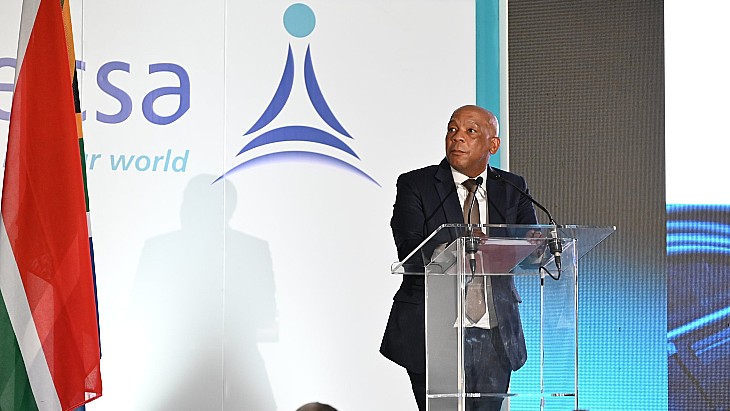
On March 25, 2025, South Africa’s Minister of Electricity and Energy, Kgosientso Ramokgopa, announced a ZAR1.2 billion (USD 66 million) budget allocation for a new multipurpose reactor at Pelindaba during the 60th anniversary celebration of the Safari-1 research reactor. The event was hosted by the Nuclear Energy Corporation of South Africa (NECSA). Safari-1, a major global supplier of radioisotopes, is set to be replaced by the upcoming reactor, pending parliamentary budget approval and co-financing efforts.
Why It Matters
This development signals a strategic pivot in South Africa’s nuclear agenda, positioning the country as a continued leader in peaceful nuclear applications on the continent. Safari-1’s legacy in global radioisotope production and advanced material science provides a critical knowledge base for nuclear medicine, research, and industry. As the only African nation with such a facility, South Africa’s investment has regional implications for healthcare innovation, energy resilience, and technological capacity building.
However, the announcement also surfaces key WMD-related concerns. The dual-use nature of nuclear technology demands robust safeguards, particularly as new reactors emerge. Financing challenges and calls for international partners could open strategic vulnerabilities if not paired with transparent nonproliferation commitments. Additionally, the push to replace Safari-1 reflects broader global dynamics—aging nuclear infrastructure, the decline of multilateral disarmament agreements, and renewed debates on nuclear deterrence versus disarmament. South Africa, as a champion of the Treaty of Pelindaba and non-nuclear posture, must navigate its ambitions with reinforced emphasis on nonproliferation norms.
The initiative may also inspire regional collaboration, particularly through SADC, by offering shared research opportunities and technical exchanges, reinforcing Africa’s collective agency in nuclear governance.
Safari-1 began operations in 1965 and has played a critical role in peaceful nuclear research. Originally commissioned under apartheid-era strategic interests, it was later converted to low-enriched uranium as part of South Africa’s post-apartheid commitment to nuclear disarmament. The proposed Multipurpose Reactor was approved in 2021, and a Request for Information was issued in 2022. Its construction is intended to ensure the continuity of vital nuclear services post-2030, when Safari-1’s current license expires.
Civil Society Call-To-Action Points
- South Africa should strengthen transparency around the new reactor’s development, ensuring full IAEA oversight and public accountability.
- Regional bodies like SADC and the African Commission on Nuclear Energy (AFCONE) should facilitate collaboration and technical support.
- International donors and partners must prioritize safeguards and technology-sharing agreements in all co-financing discussions.
- African states should leverage this moment to reaffirm their commitment to the Treaty of Pelindaba and advocate for peaceful nuclear applications continent-wide.
AFRICSIS Background
AFRICSIS is a leading African nonprofit advancing WMD nonproliferation, disarmament, and security through training, advocacy, and capacity-building across the continent. Since 2012, it has partnered with governments and regional bodies to implement innovative, locally grounded programs aligned with international frameworks. AFRICSIS emphasizes peaceful scientific and technological applications and was recognized with the 2023 OPCW-The Hague Award for its disarmament efforts. Its strong regional networks and strategic global partnerships position it as a trusted actor in African security and development.